
Project Overview
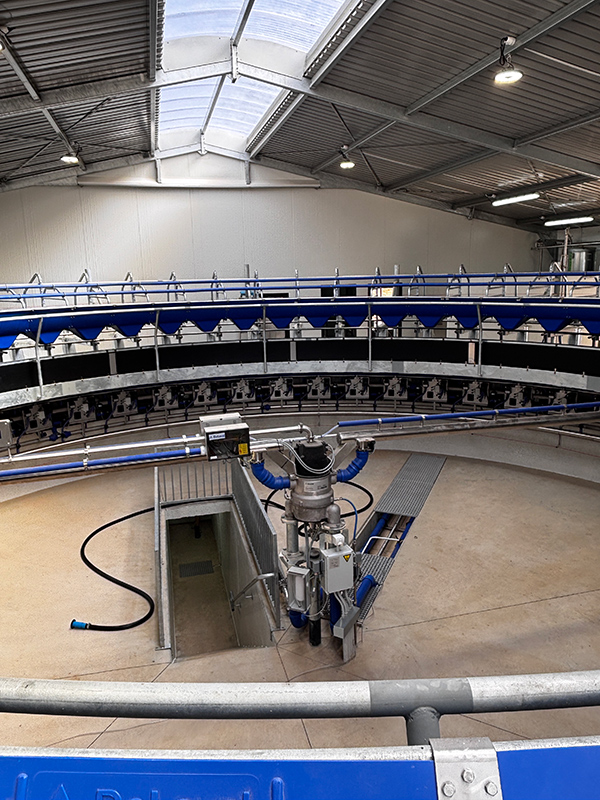
We recently completed a new rotary platform cowshed for the McCullough family farm near Karapiro.
The installation features a 50-bay DeLaval E100 rotary with flow control, designed to service a 600-cow herd. Groundworks commenced in August 2025, with the first cows entering the shed in March 2026.
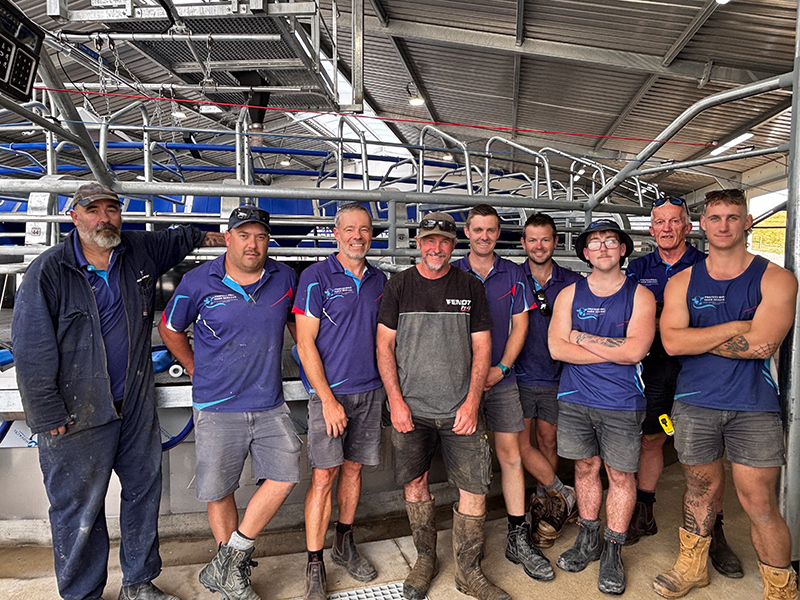
This project brought together a number of Professional Farm Services team members across multiple disciplines, from civil works through to mechanical and electrical installation, and we’re proud of the final result.
Following completion, we visited the site to see the system in operation — and to better understand how it performs in a real working environment.
Cow Flow – Designed Around Behaviour
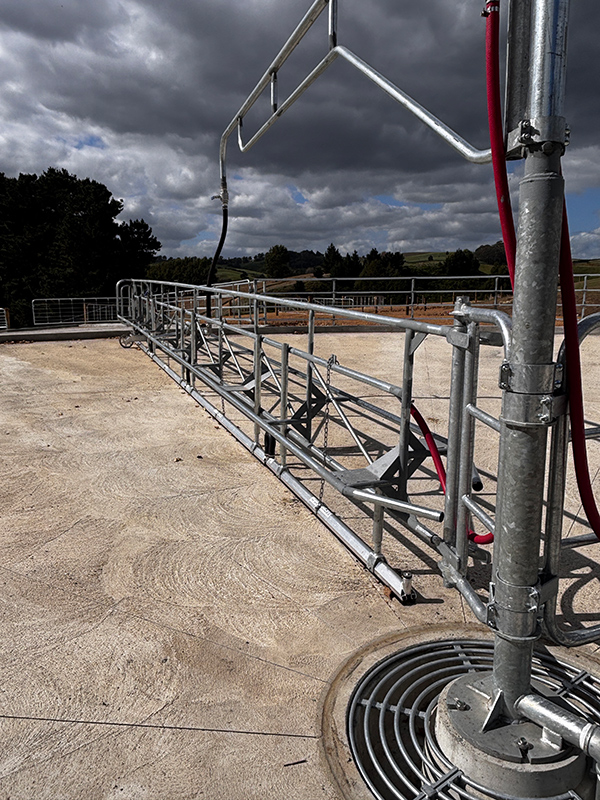
At the start of the process, cows are encouraged towards the platform by water-driven backing gates which continuously move behind the herd. The operator can start and stop them from the workstation, but most of the time the gates just run quietly in the background. The cows have learned the rhythm – and that when the water starts they just start moving.
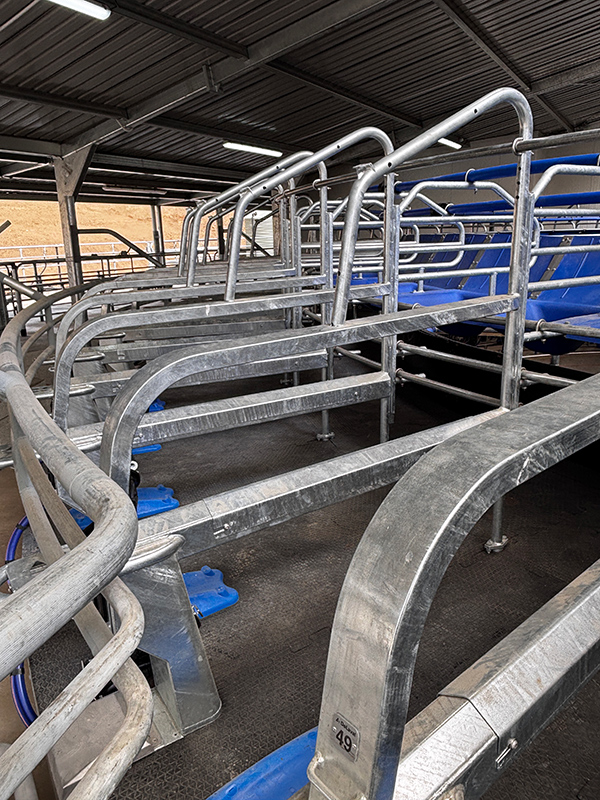
As the cows enter or exit the rotary, they have to step off and swing quite quickly – so rubber matting has been installed to ease the strain on their bodies and hooves.
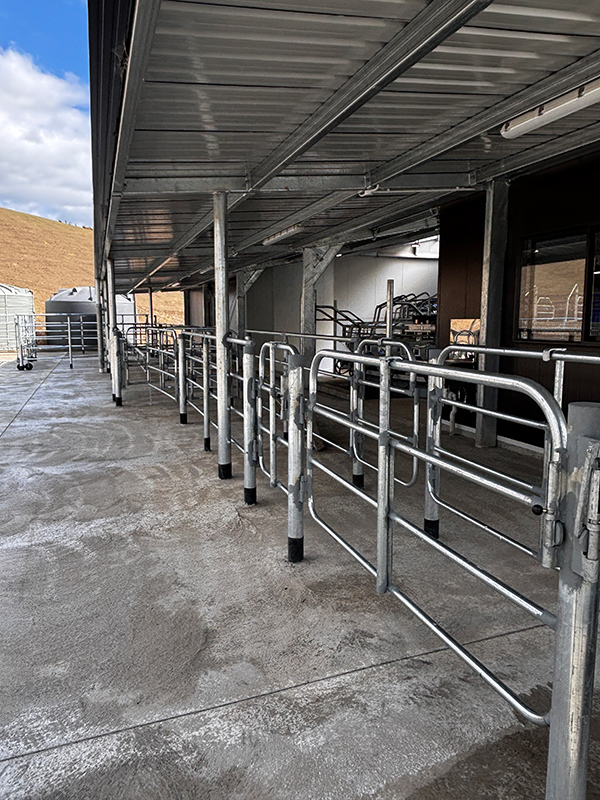
From there, the cows are drafted into different directions, back to paddock, into the vet race, or for insemination. And this whole area is under cover, with hot water available. The farmer owner Richard McCullough mentioned it casually: “Bit of a luxury really… the old shed didn’t have that.”
Drafting & Control – More Than Just Automation
Each cow is identified as she comes onto the platform. That information is confirmed again at the bay, and again through the feed system. Everything is checking and re-checking through blue-tooth communication.
The farmer could be sitting at home, and pick out four cows from a hill and bring them into the shed – without the whole herd following. That level of control is a big shift from how things used to work, and is implemented through the Halter system.
Built for Real Life (and the Future)
This is an autumn-calving farm, so right now is peak demand. The shed is designed to handle that – 600 cows moving through efficiently.
But what it’s really been built for is long-term use. “In summer, one person can run the whole shed.”
With flow control, automatic cup removers, feeding, drafting, and full visibility from the operator station, the system takes a lot of the physical pressure off.
And more importantly, Richard McCullough said, “We built this so the next generation can run it.”
That came through clearly – this isn’t just about today’s workload, it’s about making the farm easier to operate in the future.
Feeding System – The Hidden Engineering
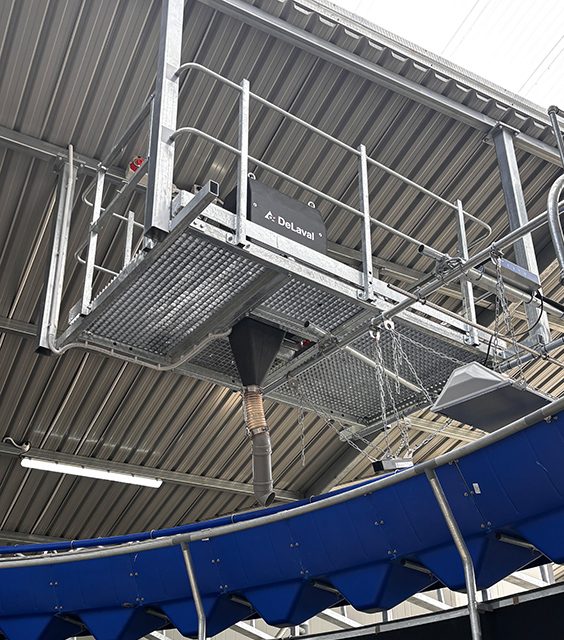
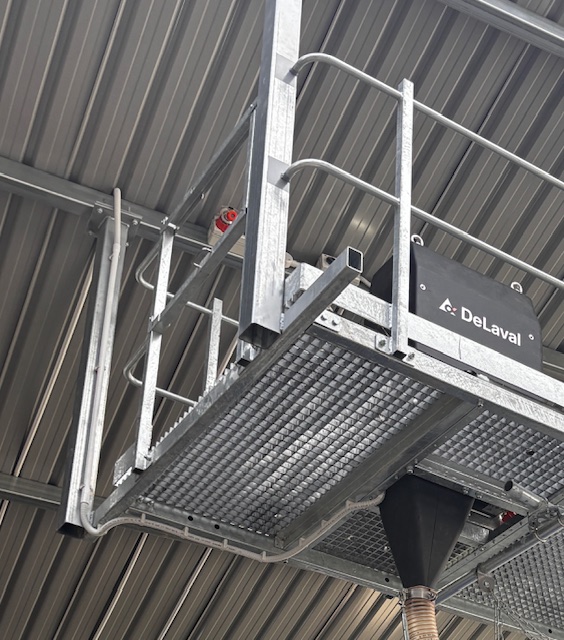
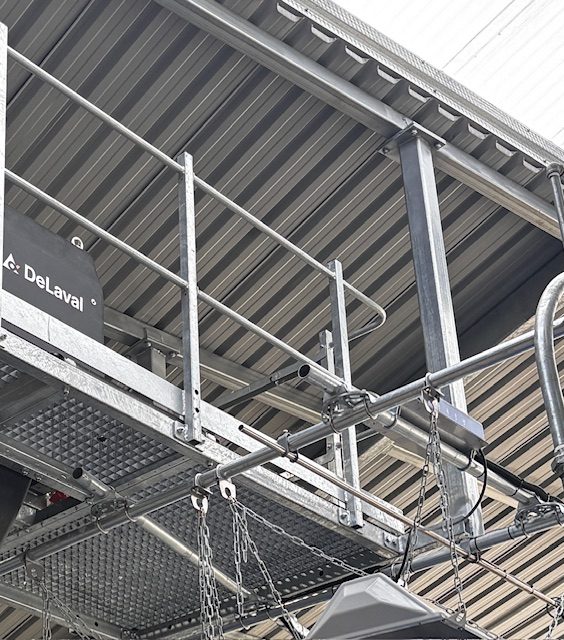
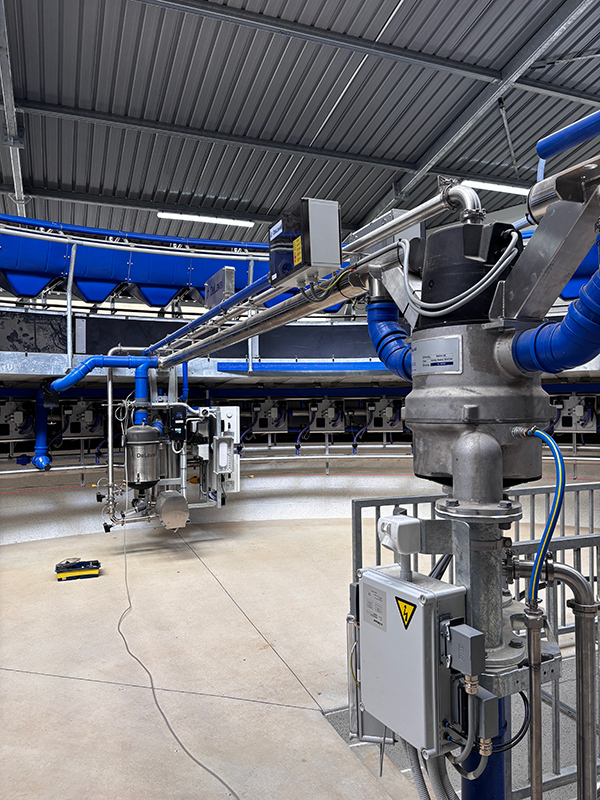
There’s a whole system above your head that you don’t immediately notice.
Each cow is identified via electronic ear tags, and feed is dispensed accordingly – a mixture of molasses, palm kernel, or soy meal – depending on what she’s allowed.
It comes down through hoppers and 100mm PVC pipes into the DeLaval header, then drops into the feed bins. The bins and system are suspended from a custom-built steel frame – a substantial piece of engineering fabricated on site.
This is also new for the farm – introducing in-shed feeding to help maintain production longer into the season, while still allowing for a proper dry period.
Under the Platform – Where the Complexity Lives
From above, everything looks clean and simple. Underneath, it’s a completely different story.
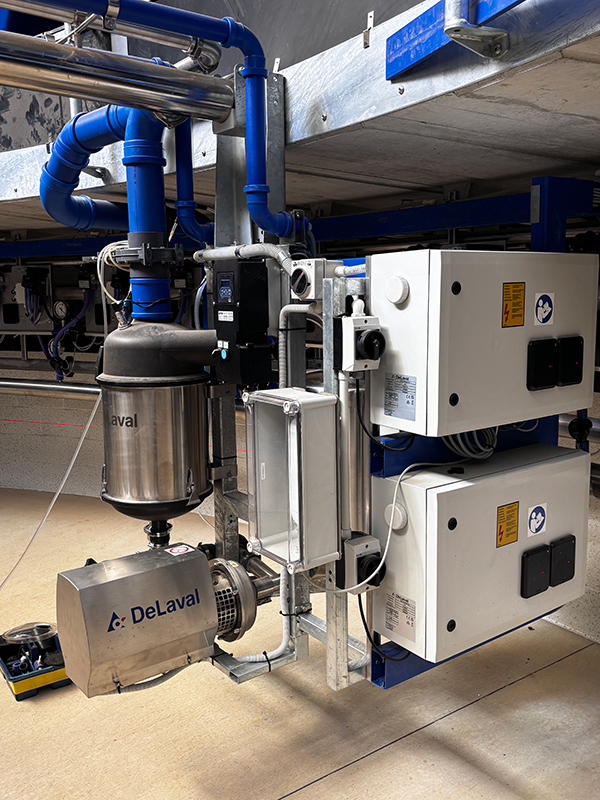
At the centre of it all is the main service column — the point where everything connects into the rotating platform. This is where milk lines, vacuum, air, water, power and control all feed into the system.
There’s a central rotating gland with multiple tracks built into it. As the platform turns, these tracks allow all the services to rotate with it without twisting or tangling.
Coming off that are all the services – which are each feeding out to the platform while its moving constantly:
- milk lines
- vacuum
- air lines
- electrical and control
And at the same time, underneath the drive system is turning the entire platform — carrying a significant amount of weight, continuously.
From above, you see cows calmly going around in a circle.
From below, you realise there’s a lot of engineering quietly making that possible.
Milking System – Responding to the Cow
This shed is running a DeLaval E100 rotary with flow control, and it’s doing a lot more than just putting cups on and taking them off.
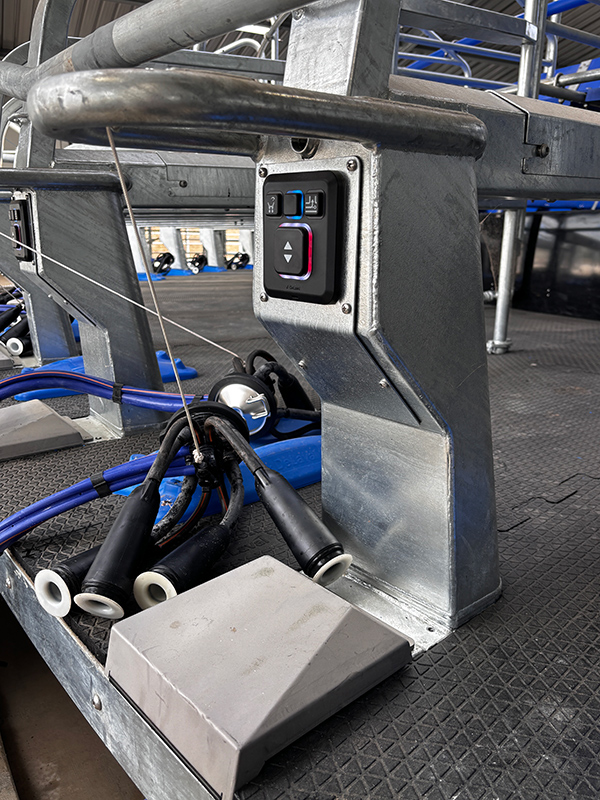
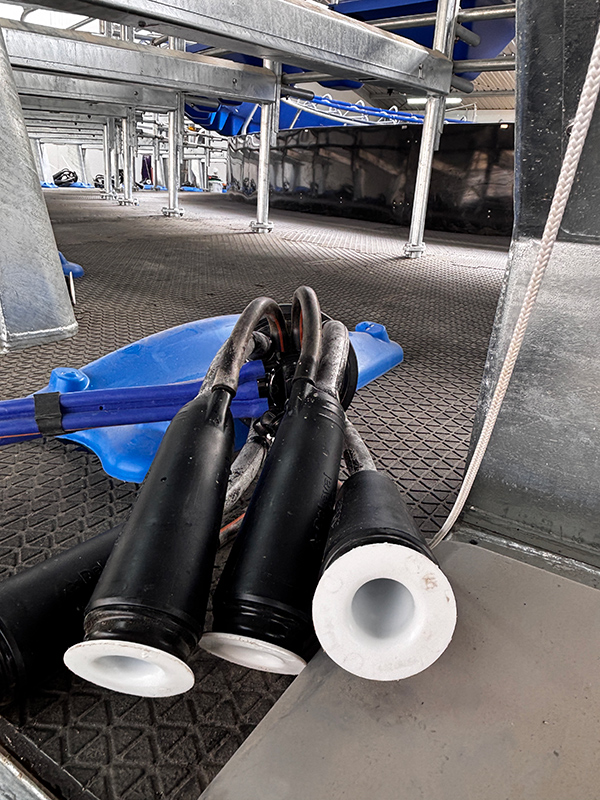
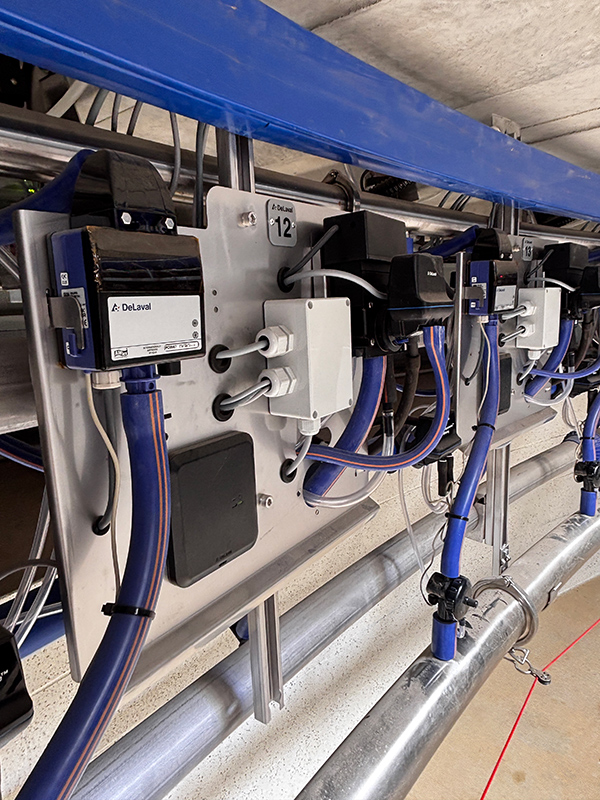
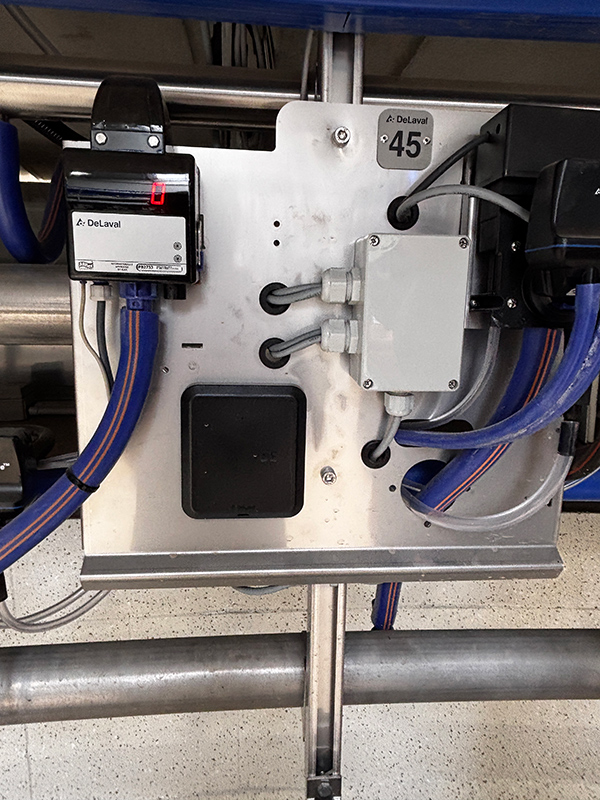
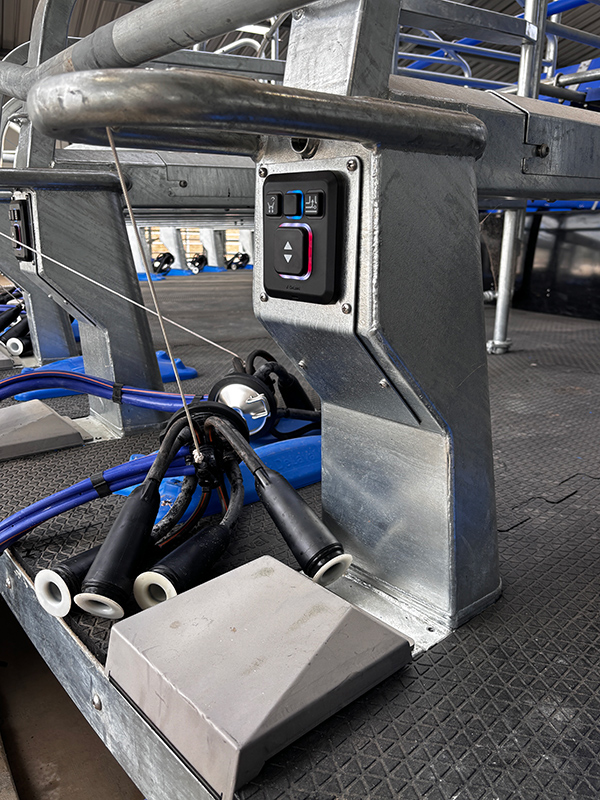
Each set of cluster cups is connected to a control unit, with a pulsator running at around 60 beats per minute (60:40 ratio). These units are all communicating back to the system, feeding data through to the operator screen.
When a cow comes on, there’s a set period (around 30 seconds, but it can be adjusted) to allow for milk letdown. If that doesn’t happen in time, the cups will automatically come off.
Once milk flow starts, the system shifts into full milking mode and continues to monitor flow throughout the cycle.
It’s not just watching for start – it’s also watching for finish.
The system can recognise when milk flow drops below a threshold and even allow for a second letdown if needed. If the flow doesn’t pick back up, the cups come off, she gets teat spray, and continues around before backing off the platform.
If a cow kicks the cups off early, it’s flagged as incomplete – lights flash on the bale and it shows up on the operator’s screen straight away.
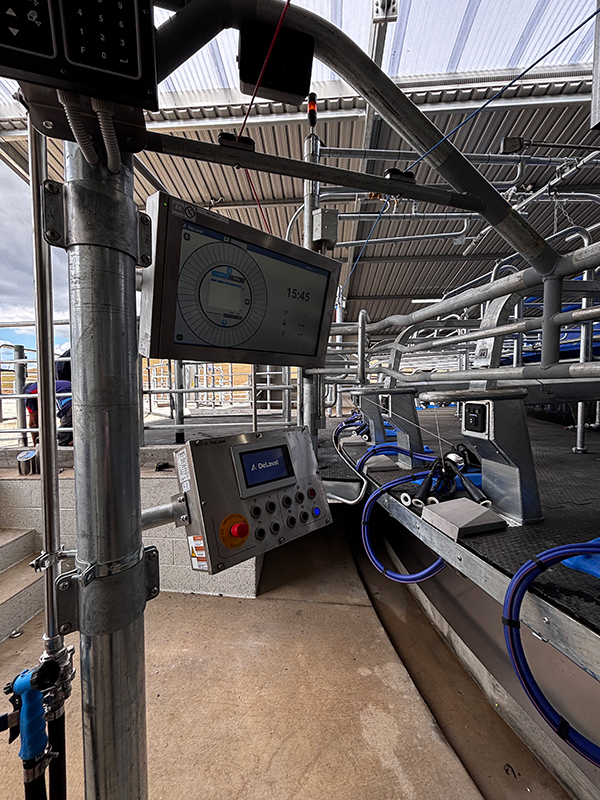
Everything is reported back in real time, so the operator can see exactly what’s happening across the whole platform.
The “Brain” of the Shed
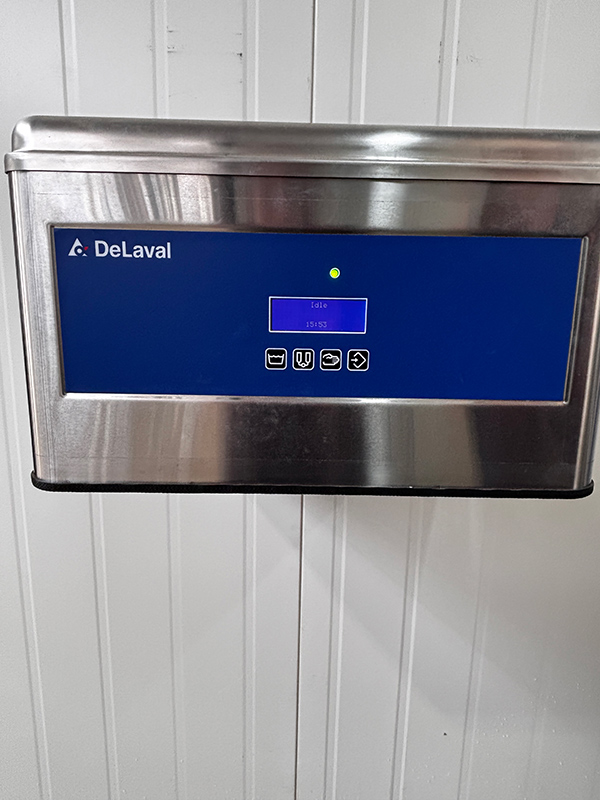
The automatic wash system runs the whole plant.
It controls:
- Milking cycles
- Wash cycles
- Chemical cleaning dosing
- Valve operation
Once it’s started, it manages the process end-to-end.
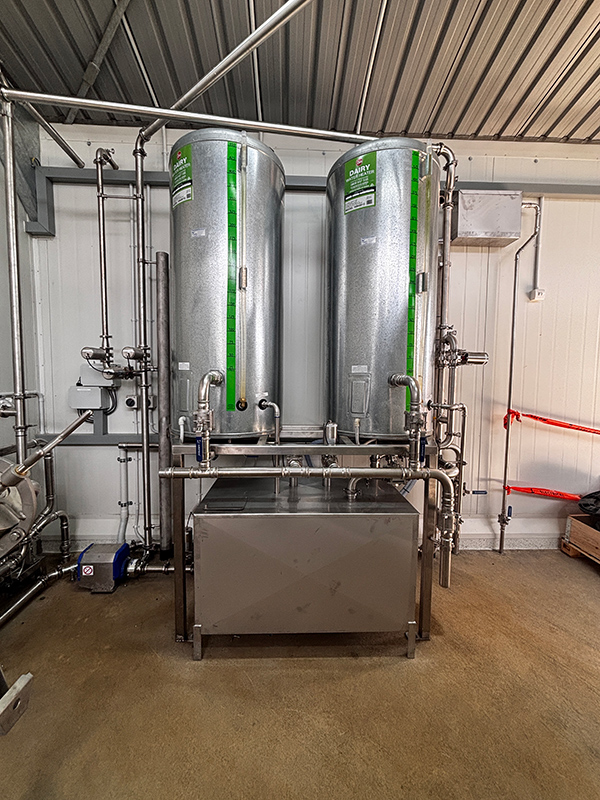
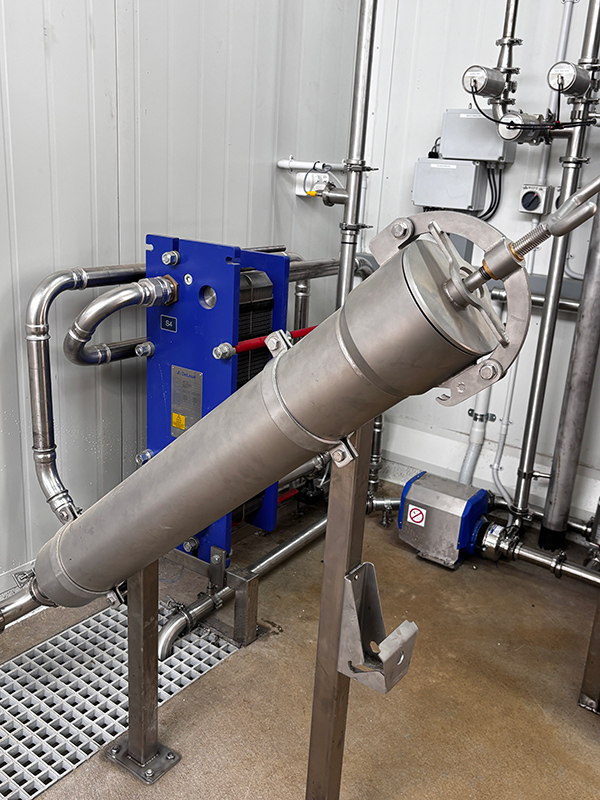
Milk flows through a filter then through a double plate cooler – first with farm water, then chilled water – before heading to the vat. Everything is designed to get the milk as cold as possible before entering the vat, in the most efficient way.
Behind the Scenes – The Plant Room
At the back of the shed is where a lot of the real work is happening – the part you don’t see when you’re watching cows go around the platform.
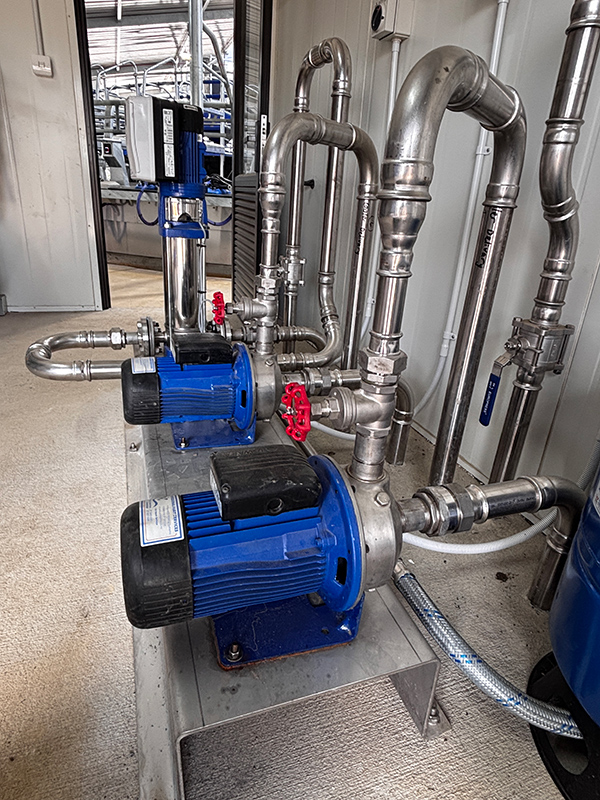
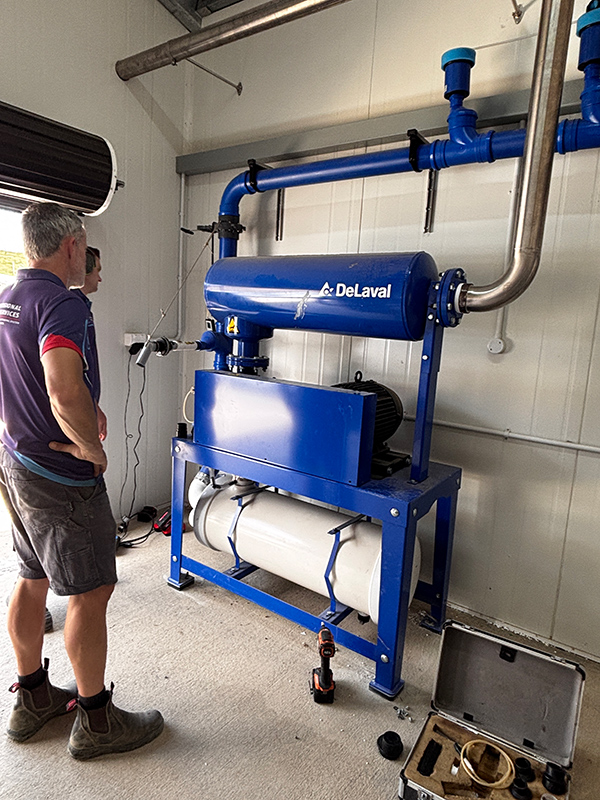
There’s a full plant room set up with the systems that keep everything running:
- the vacuum pump driving the milking plant
- the milk pump moving milk from the receiver through to the vat
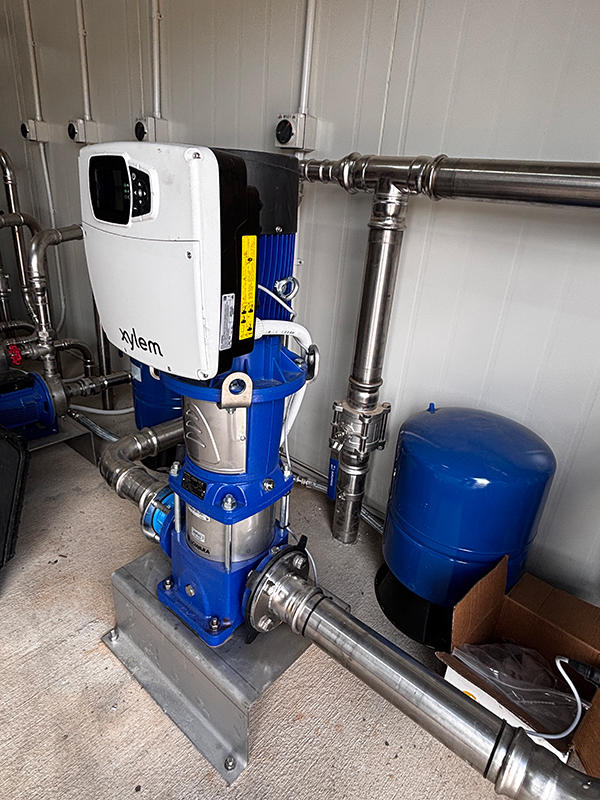
- water pumps feeding the wash system and cooling processes
- and a large air compressor, which alot of the equipment relies on
It’s all laid out in a way that actually makes sense when you’re standing in there – nothing feels crammed in or like an afterthought. The pipework is particularly tidy. Europress piping has been used for a lot of the water lines, which speeds up installation compared to traditional welding, but still gives a really clean finish.
Power & Real-World Challenges
One part of the build was the reliance on a generator due to delays in grid connection. Which Richard said, “it’s been worth its weight in gold.”
Originally purchased after Cyclone Gabrielle (when the farm lost power for seven days), it ended up playing a key role in getting the shed operational.
Generators and sensitive electronics don’t always mix – especially with VSDs – but in this case, it provided stable 50Hz power without issue.
The Detail in the Build
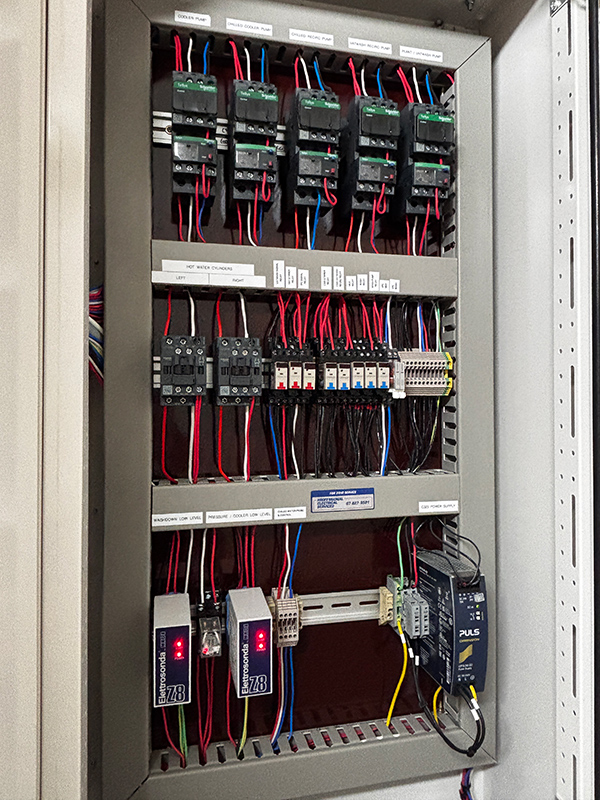
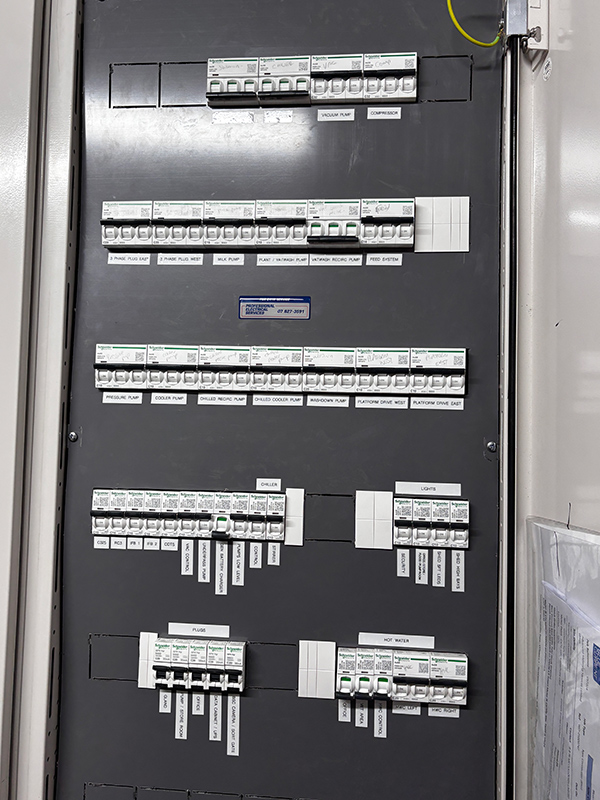
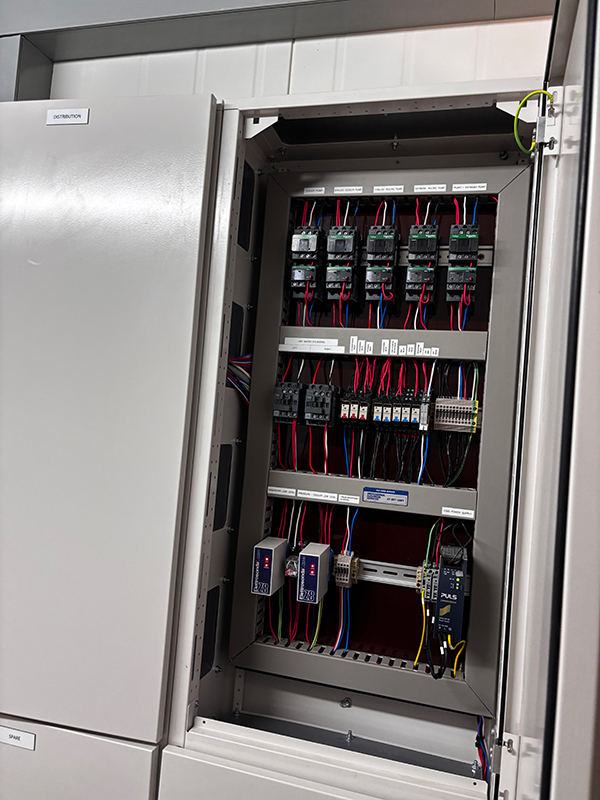
The quality of the install shows up in the small things. For example in the electrical room, the switchboard is clean, labelled, colour-coded. “You can follow it like a map.”
That kind of detail makes a big difference when it comes to maintenance and troubleshooting later on.
An Amazing Result
Walking through this shed, what stood out wasn’t just the technology – it was how everything has been thought about. Cow movement. Operator ease and comfort. Future use. Practical day-to-day farming.
There’s a lot of complexity here – but it’s been built in a way that makes it feel simple to run. Though many different pieces had to come together to make it all work. It’s a mix of the Profarm team skills in mechanical, electrical, fabrication, and on-site problem solving, all overlapping.
You can see it in the details:
- the custom steel frame holding the feed system
- the tidy pipework in the plant room
- the labelled and colour-coded switchboard
- everything fitting where it should, and working together
There were a lot of different specialists involved in this project, each bringing their own piece of the puzzle – and it’s that combination that’s made the whole system feel so well put together.
It’s easy to walk through a finished shed and just see the end result, but there’s a lot of skill sitting behind it.